C-DRONE GUIDE · 19 MAY 2026
Drone thermography: cost of a thermal building inspection
A drone thermal building inspection costs between €450 and €980 in 2026, report included — and from €750 for a small photovoltaic installation to over €12,000 for a large ground-mounted solar farm. Here is the detailed grid by building type, the factors that move the quote, and the window you must not miss: the heating season.
The 2026 price grid by building type
Unlike a simple aerial shoot, drone thermography is priced per building and per deliverable, not per flight hour: most of the work lies in the radiometric analysis of the images and the writing of the report. The ranges observed on the French market in 2026:
| Building type | Observed 2026 price | Typical deliverable |
|---|---|---|
| Single-family house (envelope audit before renovation) | €450 – 650 | Commented thermal report, 15-25 thermograms |
| Co-owned / small apartment building (façades + flat roof) | €600 – 980 | Report annotated per façade, leaks and thermal bridges located |
| Office or industrial building (offices, warehouse) | €700 – 980 | Report structured by zone, prioritised defects |
| Photovoltaic installation ≤ 100 kWp (barn, canopy, SME) | from €750 | IEC 62446-3-compliant audit, defective-module map |
| Ground-mounted solar farm (several MWp) | €3,000 – 12,000 | Full IEC 62446-3 report, defect rate per string |
| Targeted leak detection on a flat roof | €450 – 700 | Infiltration zones located, visual + thermal photos |
These prices include the flight, radiometric processing and the report. A "thermal flight" sold at €250 with no analysis or report is not thermography: it is a set of false-colour images that are useless without interpretation.
What moves the quote (and what should raise a flag)
The first price factor is the area and number of façades to cover: a house is done in an hour of flight, a six-staircase apartment block in half a day. Next comes the thermographer's qualification: interpreting a thermogram requires genuine skill (material emissivity, measurement conditions, false positives from sun or damp); an operator certified in building thermography logically charges more than a pilot who simply bolted a thermal camera onto their drone. Third factor: the equipment — a calibrated radiometric camera, which records the true temperature of every pixel, costs several thousand euros more than a "display-only" thermal camera and makes the difference between a usable report and pretty orange pictures.
Two signals should raise a flag in a quote. Thermography offered in high summer or in the middle of the day for an envelope audit: without a sufficient indoor-outdoor temperature difference (a 15°C gap is the reference), heat losses are invisible and the report is worthless. And the absence of documented measurement conditions in the report (temperatures, wind, sky, time): that is what separates a defensible measurement from a colourful impression. In built-up areas, finally, check that the operator builds the ten-working-day préfecture notice into their schedule.
When to schedule the inspection: heating season first
For a building envelope audit (heat losses, thermal bridges, insulation defects), the ideal window runs from November to March: a heated building, cold outside air, and early-morning flights before the sun warms the façades and creates false positives. An overcast sky is actually preferable to bright blue. Practical consequence: thermographers' schedules saturate from December to February. Book in October to choose your slot, especially as you sometimes have to wait for the right weather — wind limits for a drone-mounted thermal camera are stricter than for standard photography, because wind artificially cools surfaces.
The calendar flips for photovoltaics: module defects (hot spots, short-circuited diodes, disconnected strings) show up under strong sunshine, with irradiance of at least 600 W/m². The useful season runs from May to September, ideally in early afternoon. As for leak detection on flat roofs, it is best done in the evening after a sunny day: water trapped under the waterproofing releases heat more slowly than dry areas and then stands out clearly on the thermogram. Three missions, three weather windows — which is also why a serious quote always states the required conditions and includes a free-postponement clause.
Photovoltaics: the thermal audit that pays for itself
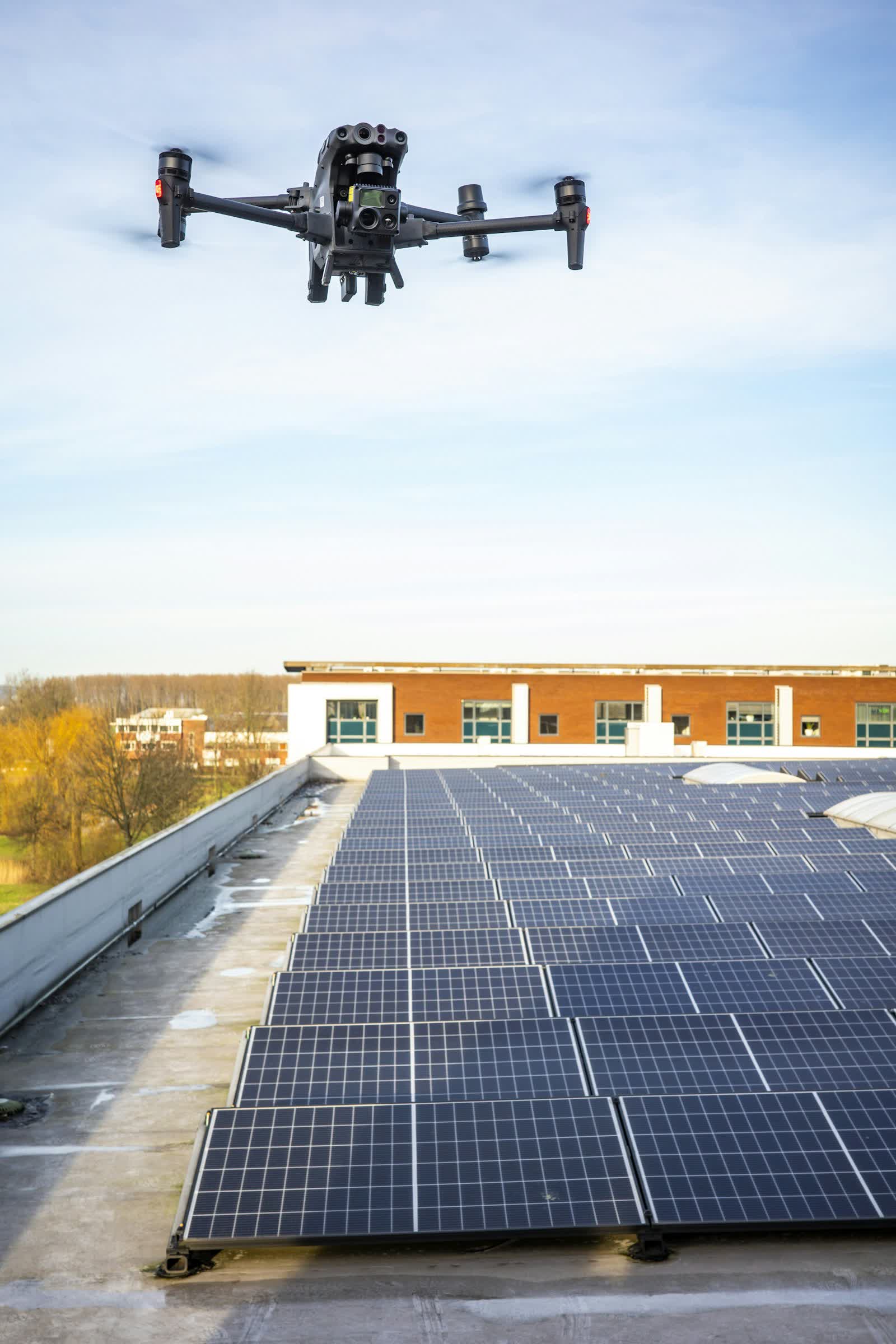
The photovoltaic case deserves its own word, because it is the only one where the thermography price compares directly with a quantifiable revenue loss. A faulty module produces less, sometimes nothing at all, and the loss goes unnoticed on a large installation as long as you only watch total output. A drone audit, conducted to the IEC 62446-3 standard governing thermal inspection of photovoltaic installations, maps every module in a few hours where a manual clamp-meter check would take days: expect from €750 for a farm-shed or SME roof up to 100 kWp, and €3,000 to €12,000 for a multi-megawatt ground-mounted plant.
The order of magnitude to remember: on a 100 kWp installation, 2% of faulty modules represent roughly €300 to €500 of lost production per year at current feed-in rates — not counting that a hot spot is also a fire risk. An audit every one to two years is the recommended frequency, and it often conditions manufacturer warranties and insurer requirements. To dig into use cases and how a mission unfolds, see our drone thermal imaging page.
What the price must include: flight, analysis, report, compliance
A complete thermography quote covers four items, and all four must appear explicitly. The flight: regulatory preparation, simultaneous thermal and visual capture (both are essential to locate anomalies). The radiometric analysis: reworking the raw thermograms, adjusting measurement parameters, eliminating false positives. The report: anomalies located, commented and prioritised, measurement conditions documented, recommended actions — allow 5 to 10 working days. Finally, compliance: operator registered on AlphaTango, mandatory aerial liability insurance (Regulation EC 785/2004), préfecture declaration ten working days ahead if the building is in a built-up area, CATS-certified pilot for specific-category missions.
We deliberately do not detail infrared measurement, emissivity or sensor choice here: our technical guide drone thermography for energy renovation covers the subject in depth. Keep the buying logic in mind: you are not paying for a drone that flies, you are paying for a defensible diagnosis that steers tens of thousands of euros of works or protects an installation worth hundreds of thousands. Seen that way, the €450 to €980 of serious thermography is one of the best information-per-euro diagnostics in the building trade.
Frequently asked questions about drone thermography prices
How much does drone thermography cost? Between €450 and €980 for a building (house, co-owned block, offices), analysis report included. For photovoltaics: from €750 up to 100 kWp, and €3,000 to €12,000 for large ground-mounted plants.
Why is it more expensive than a visual inspection? Because the price mainly pays for the analysis: a calibrated radiometric camera, building-thermography expertise, thermogram processing and a documented report. The flight itself is only a fraction of the work.
Can a building thermography be done in summer? Not for an envelope audit: you need roughly a 15°C gap between the heated interior and the outside, hence the heating season (November to March). Summer is, however, the right season for photovoltaics and flat-roof leak detection.
Does drone thermography replace a regulatory energy audit? No: it complements it. The regulatory audit models performance; thermography shows the envelope's actual defects. It is an excellent decision aid before works, and solid evidence in a renovation file.
How long until I receive the report? Allow 5 to 10 working days after the flight for an analysed report. Add ten working days of préfecture notice if the building is in a built-up area.